


Skip to Content
Xcell
  • Solutions
  • About-us
  • Careers
  • Contact us
  • ​


  • Sign in
  • Contact Us
Xcell
      • Solutions
      • About-us
      • Careers
      • Contact us
    • ​


    • Sign in
    • Contact Us


    Next-Generation Battery Performance with 

    3D PAD Electrodes


    Customer Needs Driving the Solution

    Today’s battery-powered applications—from electric mobility to industrial equipment and consumer electronics—demand far more than what conventional electrodes can deliver. Across industries, customers consistently seek improvements in four critical dimensions:

    1

    High Power Output

    Instant and reliable power delivery for demanding use cases.

    2

    Higher Energy Capacity

    Longer runtime and increased energy storage without adding size or weight.

    3

    Enhanced Safety

    Stable thermal behavior and minimized risk during high-rate operation.

    4

    Fast Charging Capability

    Significantly reduced charging time without compromising cycle life.

    Scientific studies have already explored this technology:


    University of Michigan team introduced laser-patterned 3D graphite anodes, enabling a fast-charging breakthrough.


    TU Munich researchers developed mechanical embossing as a cost-effective alternative to laser structuring.


    TU Munich team published a laser vs. embossing comparison, guiding industrial adoption.


    Fraunhofer IFAM explored screen printing for structured electrodes, targeting scalable manufacturing.


    BFH (Bern University of Applied Sciences) investigated patterned electrode production for industrial feasibility.

    Why Hasn’t It Been Done?


    Old solutions dominate because of habits and investments in established technologies.
    Only true innovation can break the mold — disruption through XCELL Battery Technology.

    How XCellBT solutions works


    Solving the Energy–Power Tradeoff

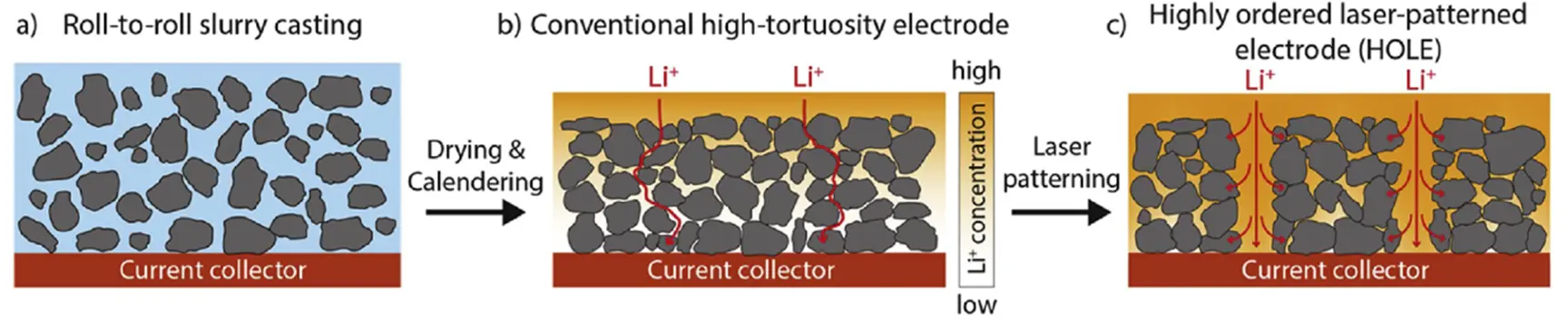
    Boosting energy density with advanced materials requires thicker electrodes, which increase areal capacity and reduce the impact of inactive components.

    Yet thicker electrodes also create longer ion pathways, causing a tradeoff between energy density and power performance (Fig. b).

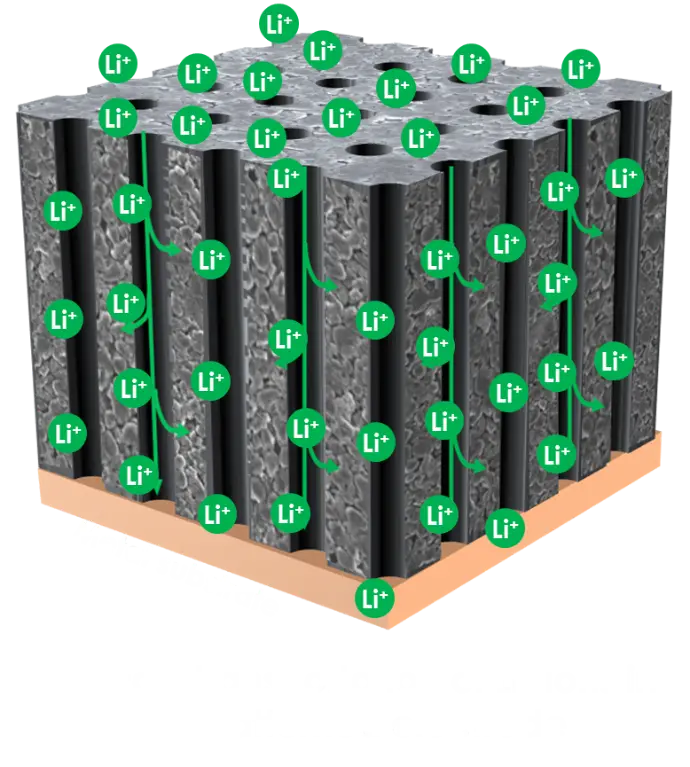
    By introducing small, patterned holes into the electrode structure (Fig. c), ion transport becomes faster and more direct, enabling high energy and high power simultaneously.


    3D PAD Electrode – High-Speed Ion Pathways for Next-Generation Batteries

    The 3-Dimensional Pore Array Diagram (3D PAD) electrode features highly aligned pore channels across both the anode and cathode, creating ultra-fast pathways for ion transport.

    This engineered structure dramatically reduces tortuosity and unlocks the ability to use thicker electrodes—delivering higher energy density without sacrificing power performance.


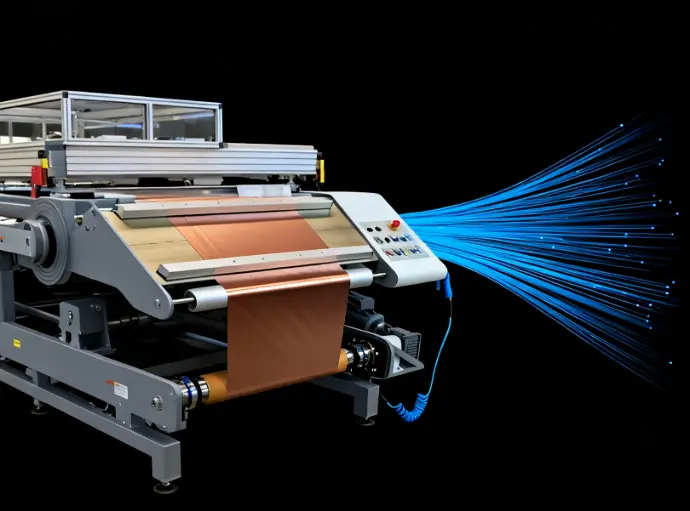
    Roll-to-Roll Lab Screen Printing Line

    Engineered for 3D PAD Electrodes


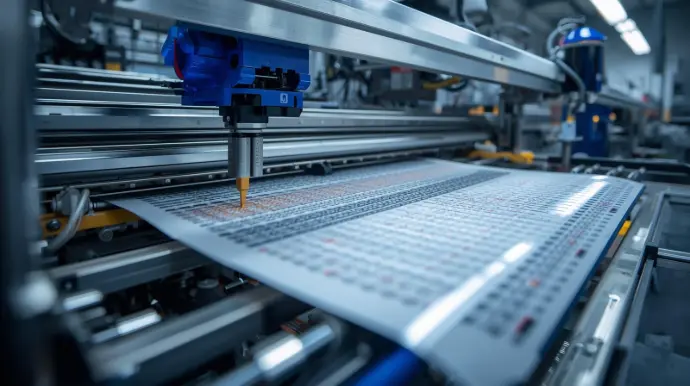
    A roll-to-roll screen printing solution engineered for 3D PAD electrodes—empowering lab R&D and small-batch production with industrial-grade performance!

    ​·Max print size: 600×600mm (W×L), 16.7m/min speed

    ​·6m dryer (max. 150℃) + automatic camera registration

    ​·High precision, scalability, cost-effectiveness 

    Seamless R&D-to-mass production—solve 3D PAD electrode printing challenges efficiently!

    Note: Technology currently at proof-of-concept (PoC, TRL 4/5) stage.

    3D PAD: Power Meets Efficiency

    Achieve superior energy density while keeping production costs low
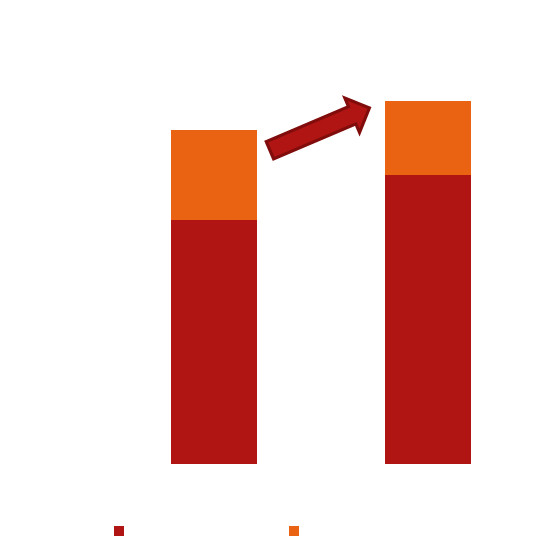
    Performance Improvement of XCellBT Batteries Compared to Traditional Drone Batteries

    +67%

    Cycle Life

    +30%

    Energy Density

    -45%

    Cost

    +200%

    Charge Rate

    +300%

    Discharge Rate:

    Battery technology’s 

    core challenges now have a stronger solution

    our 3D PAD technology is breaking through industry bottlenecks on multiple fronts:

    1. Mitigate Dendrite Growth  

    Safeguard Battery Stability

    The Lithium Dendrite Challenge: From Risk to Control

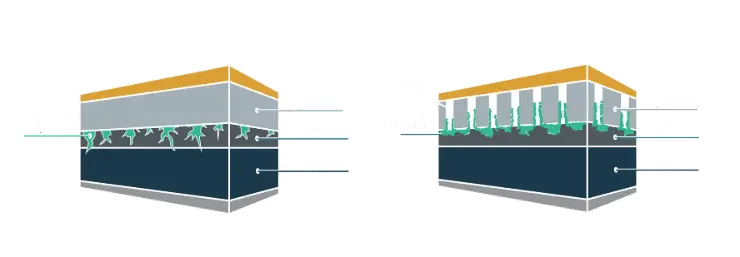
    Lithium dendrites—metallic lithium deposits on the anode—crystallize and grow toward the cathode over time, eventually piercing the separator and causing dangerous short circuits. They’re a critical threat to battery safety and longevity.

    3D PAD’s game-changing technology

    Its engineered channels drastically reduce Li⁺ concentration gradients (see Fig. b), fundamentally curbing dendrite growth. What’s more, expansion is redirected to minimize force on the separator, with extra space allocated for swelling—two mechanisms working in tandem to significantly lower dendrite risks.
    2. Enhanced lifetime of Si-anodes

    Unlock Silicon’s Full Potential

    Silicon Anodes: Elevating Lithium Storage Capacity

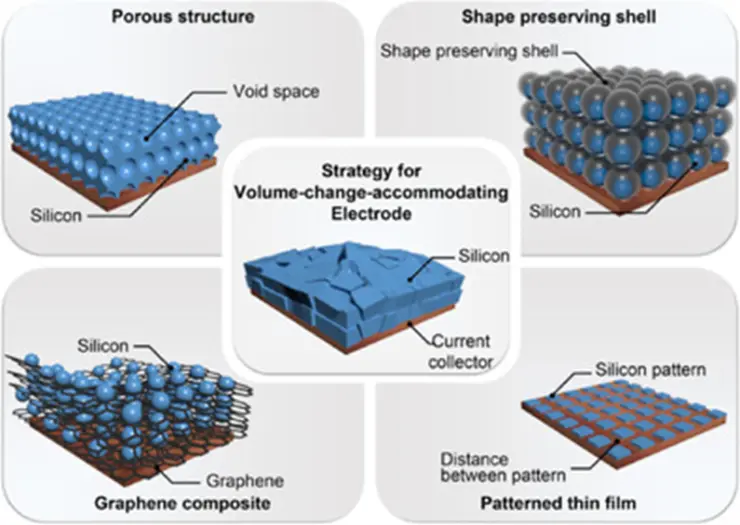
    With a dramatically enhanced ability to absorb lithium ions compared to graphite, silicon is the key enabler for ultra-high-capacity anodes. While this material promises unparalleled energy density, its adoption presents inherent technical hurdles:

    • Extreme volume expansion (causing stress, cracks, and pulverization)
    • Unstable SEI layers (repeated breakdown from expansion/shrinkage leads to electrolyte loss and irreversible capacity fade)
    • Shortened lifespan and lower initial Coulombic efficiency (ICE)

     Source: https://chemistry-europe.onlinelibrary.wiley.com/doi/10.1002/celc.201500254


    3D PAD changes the equation

    Our porous structure compensates for silicon’s volume shifts, providing dedicated space for expansion. The result? No cracks, stabilized SEI layers, and extended cycle life—scientifically validated.

    Finally, silicon’s full potential, without compromise.

    3. Performance Optimization: 

    Do More with Greater Efficiency

    With 3D PAD technology, the same active material delivers better results—while cutting costs:

    • Gravimetric Energy Density: +8.8% boost (vs. reference cells)

    • Volumetric Energy Density: +8% improvement (vs. reference cells)

    • Material Cost Reduction: 9.2% lower, dropping to $62.6/kWh (from $68.2/kWh)

    4.Cost Efficiency: 

    Cut costs, boost margins

    Cost Savings: 3D PAD Rewrites Production Economics


    For battery manufacturing, “cost-efficient” no longer means compromising on performance. XCellBT 3D PAD technology slashes costs while making production faster and greener:

    Near-Term OPEX Wins

    Choose your path to savings:

    • 3D PAD wet printing: ~10% short-term OPEX reduction
    • 3D PAD dry printing: Up to 30% near-term OPEX savings

    Smarter, Leaner Production.

    Traditional Technology
    XCellBT 3D PAD

    Requires drying furnaces, typically 50 meters or longer and dry rooms for their coating process = energy intense

    Uses micro-environments and infra-red drying which is faster and more energy efficient

    Layers of 100-150 micrometers are printed. It is complicated to dry these layer thicknesses thoroughly in one go.

    Layers of approximately 50 micrometers are printed in three steps. These layer thicknesses are quick and easy to dry.

    Particularly thick layers can be dried without cracks.

    Due to the thin layers per print step and the additional pores, the solvent can escape more easily

    US$70-US$100M capital required to install 1 GWh of capacity

    ~US$50M capital required to install 1 GWh of capacity in Phase 1

    Slurries with a solvent content of approximately 75% are used

    Pastes with a solvent content of <40% are used. Less solvent means less energy is required for drying.


    Next steps roadmap:


    1. Equipment Upgrade

    Standard screen printer → Customized high-precision printer

    Designed for thick, structured and multi-layer electrodes.

    2. Process Transformation

    Wet screen-printing → Dry screen-printing

    Eliminates slurry mixing, drying, 

    solvent recovery and most material losses.

    3. Dry Printing Process for SSB

    Dry printing process for solid-state batteries and 3D PAD structural design.

    Eliminates solvent use, reduces manufacturing cost.

    Facilitates ionic and electronic transportation, boosts power and energy densities.

    Seamlessly compatible with our current proprietary 3D PAD POC lines.

    70%  Reduction in space utilization

    60%   Reduction in energy consumption

    40%  Reduction in CapEx + OpEx


    4717 Campus Dr, Kalamazoo, 

    MI 49008, United States 

    • ​

    • info@xcellbt.com

    Copyright © 2025 XCELL Battery Technology Inc.

    Powered by Odoo - Create a free website

    We use cookies to provide you a better user experience on this website. Cookie Policy

    Only essentials I agree